.png)
Volume 3 Issue 4 ( December 2024)


EDITORIAL
Multiscalar Brain Adaptability in AI Systems
Shantipriya Parida
The advent of Generative artificial intelligence (AI) has transformed creative and analytical landscapes, leveraging vast datasets to produce sophisticated outputs with remarkable efficiency. Despite these advancements, human judgment and adaptability remain indispensable for navigating complex, dynamic, and context-sensitive environments. This special issue and its collection of papers explored the interplay between human cognition, AI, and consciousness, emphasizing how the brain’s multiscale adaptability can inform the development of conscious AI systems. Artificial General Intelligence (AGI) is at the core of this exploration, which seeks to emulate human cognitive flexibility, reasoning, and learning within computational paradigms. While AGI excels in predefined tasks, it falters in managing uncertainty and unpredictability. By contrast, Strong Artificial Intelligence (SAI) envisions systems capable of mind-like processes—managing uncertainty and anticipating unexpected events. Achieving SAI requires a deeper understanding of the brain’s adaptability, spanning multiple scales from synaptic plasticity to precognitive consciousness. Consciousness, defined as the phenomenal experience or the subjective "feeling" of awareness, remains a formidable challenge in AI development. Current neural architectures, such as those in deep learning, can mimic patterns of intentionality but lack the intrinsic depth of consciousness...
ORIGINAL RESEARCH
The illusion of intrinsic meaning: reassessing conscious experience
Thomas W. Loker
The illusion of intrinsic meaning in predictive coding through cognitive artifacts to minimize prediction errors points toward a functionalist attempt at understanding conscious experience. It examines how conscious experience functions in predictive coding and symbolic cognition systems within the brain. We argue that conscious experience emerges from the need to construct coherent narratives for survival and decision-making by addressing recent developments in diverse fields like cognitive neuroscience, philosophy, and artificial intelligence. Additionally, the paper explores the implications for artificial intelligence, suggesting that artificial systems could develop analogous cognitive artifacts through predictive models without subjective awareness, contributing to a functionalist understanding of consciousness and further advancing the discussion on the nature of conscious experience in biological and artificial systems.

BRIEF REPORT
R.R. Poznanski and E. Alemdar
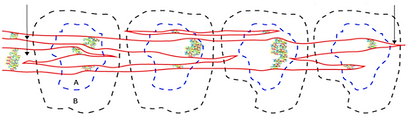
A new approach attempts to express the poststructural dynamics of the entropic brain in terms of the ‘hidden’ structure of uncertainties. It highlights the importance of understanding how consciousness operates within a functional system approach that appropriately considers changeable boundary conditions through functional interactions. The causality is sought in boundary conditions when uncertainty reduction becomes an act of understanding as a course of action that navigates the multiscale landscape of potentialities. Motion through the multiscale landscape continuously changes uncertainties into intentionalities via ‘multiscale redundancy.’ In the multiscale version of the entropic brain, the ‘hidden’ structure of uncertainties unfolding through the poststructural dynamics occurring at different locations, levels, and times that instantly actualize through intermittent interactions as precognitive experienceabilities and combine into a global resonance before returning to spontaneous potentiality. The entropic brain is the ‘hidden’ structure of uncertainties unfolding through poststructural dynamics in the transition from potentialities to intentionalities, giving form to action via quantum potential energy and then motion via quantum kinetic energy through new information pathways. These self-referential pathways enable one to predict the minimal uncertainty as the ‘quantum of information’ functionality. It also suggests that reducing uncertainty is an act of understanding that could, in principle, mimic the conscious experience in artificial intelligence by transcending neural computability and, therefore, highlighting the importance of self-referentiality as the mechanism of ‘affective drive’ in broadcasting multiscale redundancy in the landscape of action.
ORIGINAL RESEARCH
Dirk K. F. Meijer and Franco Ivaldi
Elemental intelligence is a metaphysical concept. We propose that elemental intelligence is an intrinsic part of the fabric of the universe. It suggests that everything in existence might have a sort of proto-consciousness, with larger and more complex systems like living beings having more developed or differentiated forms of awareness. Additionally, we identify the challenges of how AI interacts with this universal consciousness in our universe. In this article, an analysis is carried out on the basic mechanisms inherent in the functioning of the living and conscious universe that seems permeated by an elemental intelligence, the latter seen as a metaphysical concept. We substantiate this framework and submit that primordial proton/electron composite units, covered with multiple phonons (forming quasi-particles), exhibit attractive and repulsive charge interactions or generate chiral vortex dynamics, thereby generating the forces of gravity and anti-gravity (dark energy). Density fluctuation of phonons is preferred over photon oscillations, assuming dense super-fluid space conditions. The frequency pattern of an “Acoustic Quantum Code of Resonant Coherence” is detected in a multi-scale spectrum, including cosmic gravitational waves at the macro-scale, in measured oscillations of Zero-point Energy field, as well as in Electro-Magnetic frequencies (EMF) that promote entanglement and superconductivity. With regard to brain function, an almost perfect frequency fit of our acoustic code was revealed for brain microtubule oscillations and blackbody radiation at the Planck scale, numerically supporting the Orch-OR consciousness theory. The present results also confirm the Creation Field model for Life, proposed by others and framed as a “General Music Code”. The acoustic quantum code is conceived as primordial, with its scale-invariant correlation of (renormalized) EMF wave frequencies at the Planck scale, at the Zero-point Energy field-, Cosmic Microwave Background-, and Gravitational levels. A 4th spatial dimension is required in this context, with time constituting a 5-D universe space-time. So, an intrinsic elementary intelligence of the cosmos is revealed that, in superposition with human-created artificial intelligence, is considered in the nexus of our Universe, offering both potential and inherent challenges. Although present and future AI may allow a major acceleration of human scientific endeavors, AI-generated products require stringent top-down and bottom-up quality surveillance through a protective “immune system” for the Internet. A reconstructive universe is proposed in which elemental intelligence functions as a ”recipe” (a set of rules) that also may enable the rebirth of our universe in a time-reversed mode. The Acoustic code script was also shown to have been instrumental in biological evolution and the creation of first life....
